
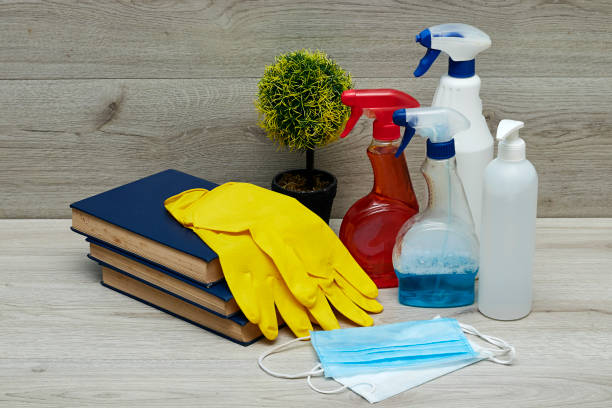
Crewcare, a cleaning company, uses a wide range of cleaning chemicals to perform its job well. These chemicals are vital for maintaining a clean, hygienic, and safe environment. These specialized cleaning agents are used in all kinds of places, from our homes and offices to hospitals and public spaces. They remove dirt, stains, and microorganisms that can be harmful to our health and cleanliness.
Cleaning agents are effective because they have different formulations that each address a specific cleaning challenge. This article will explain the science behind cleaning agents so you can understand how they work.
Understanding the principles of cleaning agents will empower you to make the best choices for your home and workplace.
What are the most common cleaning chemicals, and how do they work?
You may need to combine two or more cleaning agents or chemicals depending on the task to get the best results. Here is a list of the most popular products and their functions:
Detergents
Detergents, also known as cleansing agents, dissolve dirt and grease to make it easier to wash them away. Surfactants are responsible for this action, as their unique molecular structure allows them to interact with both water and oil.
The hydrophobic end of the molecule attracts oil, and the hydrophilic end is water-attracting. The dual nature of surfactants allows them to form emulsions that break down the bonds between surfaces and dirt.
How Detergents work:
The hydrophobic ends of surfactant molecules adhere to grease, dirt, or oil and surround or trap them. The hydrophilic ends form a barrier that surrounds the oil droplets and disperses the dirt. This is called emulsification.
It is easier to wipe or wash away the dirt once it has been emulsified.
Disinfectants
A disinfectant is an agent that cleans to kill or prevent the growth of microorganisms such as bacteria, viruses, and fungi. Note that some disinfectants may only work against certain organisms, while others are effective on multiple germs.
Hydrogen peroxide, bleach, and chlorine are popular disinfectants. They disrupt vital processes in microbial cells, making them incapable of reproduction or survival.
How disinfectants work:
Different disinfectants work in various ways. Some common mechanisms include:
Cell membrane disruption. Certain disinfectants destroy the cell membranes in microorganisms. After the cell membrane has been destroyed, the cells of the organism cannot function properly.
Denaturation of proteins. The structure and function of microbial cells are dependent on proteins. Denatured proteins lose their function and have a three-dimensional alteration. This disruption of protein function can lead to the death of microorganisms.
Nucleic Acid Infringement. Some disinfectants disrupt DNA replication and RNA transcription in microorganisms. This prevents them from reproducing or performing essential genetic functions. Microorganisms that are unable to reproduce will eventually die.
Oxidation. Some disinfectants cause oxidative damage in microbial cells. These disinfectants produce reactive oxygen species, which react with cell components and cause cellular damage.
Enzyme inhibition. Disinfectants can also inhibit important enzymes that are essential to microorganism survival. Enzymes play a role in many metabolic pathways. If these pathways are disrupted, microorganisms are unable to perform their vital cellular functions.
Disruption of pH. Finally, there are disinfectants that alter the pH in the environment to create conditions unfriendly for microbial growth. A sudden change in pH can affect a microorganism’s ability to survive and reproduce.
Sanitizers
Sanitizers are different from disinfectants, which kill or stop microorganisms. They reduce the microbial burden on surfaces to an acceptable level. Sanitizers are essential for maintaining hygiene in any setting, but especially in those where the prevention of infection is paramount.
Sanitizers use a variety of mechanisms to reduce microbial contamination.
How Sanitisers work:
Alcohol-based sanitizers that contain ethanol or isopropyl are effective against many microorganisms. These alcohols disrupt the molecular structure of proteins, causing membrane damage and cell death.
Sanitizers can also be used to remove microbes using cationic action. Quaternary ammonium compounds (QACs) are a good example of low-level disinfectants. QACs have positive charges that bind with negatively charged components found on the surface of microbes.
Some sanitizers exhibit the same oxidative effect as disinfectants. They also have broad-spectrum antimicrobial activity and are effective against bacteria, viruses, and fungi.
Degreasers
While some detergents can remove oily or grease residues, their hydrophobic properties make them ineffective. Degreasers are the answer.
Degreasers can be used to remove grease and oil. Degreasers are cleaning chemicals that remove grease and oil.
How degreasers work:
Degreasers usually contain solvents with a high affinity to hydrophobic substances (water-repellent), such as grease and oil. These solvents penetrate grease layers, breaking bonds between molecules. This process turns grease and oil into a liquid solution that is easily printable or wiped off.
Degreasers can also contain surfactants similar to those in detergents. This allows the degreaser to emulsify grease and prevents it from resettling on the surface.
Alkaline degreasers, such as sodium hydroxide or caustic soda, have become popular in industrial settings. This chemical reaction occurs when the alkaline substance reacts with fats and oils, resulting in soap-like substances that can be rinsed off.